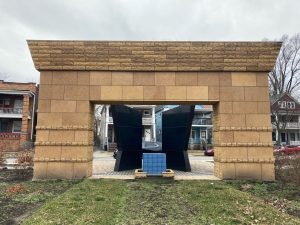
African American Cultural Garden celebrates Juneteenth, adds Civil Rights Trail marker
by Paris Wolfe, Cleveland.com June 14, 2023
The link is here
www.teachingcleveland.org
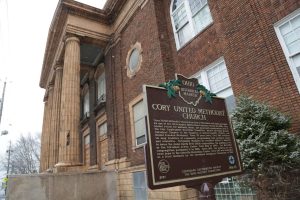
African American Cultural Garden celebrates Juneteenth, adds Civil Rights Trail marker
by Paris Wolfe, Cleveland.com June 14, 2023
The link is here
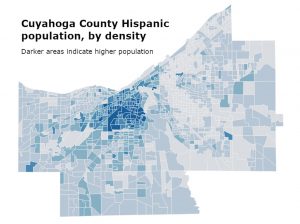
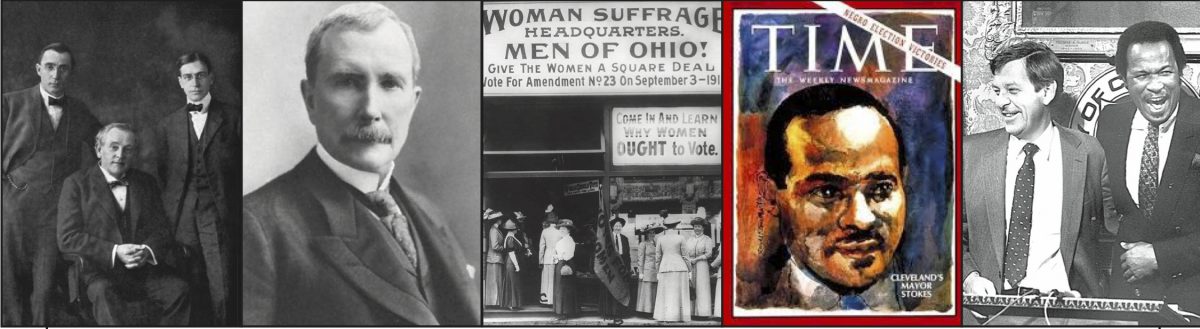
Join Nishani Frazier, an Associate Professor of History and American Studies at the University of Kansas for a webinar on the civil rights movement in Cleveland.
In conjunction with the Cleveland Civil Rights Trail, Frazier will cover the long arch of political activism among Black Clevelanders from around the city’s founding to the modern civil rights era, and document how this rich history relates to the present day. Come celebrate Black History Month by learning about the history of Civil Rights in Cleveland. This program is made possible in part by Ohio Humanities, a state affiliate of the National Endowment for the Humanities.
Any views, findings, conclusions, or recommendations expressed in this publication/ exhibition/program/website do not necessarily reflect those of the National Endowment for the Humanities.
Visit https://clevelandcivilrightstrail.org/ to learn more about the Cleveland Civil Rights Trail.

by Jacob T Mach, 2020, Master of Arts (MA), Bowling Green State University, History.
Ohio politics during the Reconstruction era has received sparse treatment by historians. Not until 1970 with Felice Bonadio’s North of Reconstruction was there a monograph solely dedicated to Ohio politics during the era. Robert Sawrey wrote his Dubious Victory in 1992, but still the historiography on Reconstruction Ohio remains dramatically underdeveloped. In Ohio, the question of African American suffrage was the single most divisive issue facing politicians during the era. Radical Republicans brought a referendum before the people of Ohio in 1867 to change the state constitution to protect the suffrage rights of both white and black males above the age of 21. The measure failed 216,987 votes (45.9 percent) to 255,340 (54.1 percent) votes. The failure of the suffrage amendment disheartened many Radical Republicans across Ohio and the rest of the North, yet Ohio Republicans managed to elicit more support for suffrage than most states in the North. Such support did not arise randomly; it intentionally developed over a three-year period beginning after the Civil War. Two primary research questions drive this project: 1) Did suffrage become a crucial issue in the state of Ohio earlier than the existing historiography suggests, 2) why were Ohio radicals able to generate more support for black suffrage within the Republican party than in other states in the North? By showing that Republican support (through Congressional voting records, public support via speeches and letters, and by Republican-sympathetic papers throughout the state) for black suffrage existed in significant numbers in 1865 (prior to 1866-1867, as Bonadio, Sawrey and others suggest) in both the Western Reserve and in other parts of the state and only continued to grow until the referendum in the fall of 1867, this project will argue that black suffrage was not only being pursued by radicals, but ultimately by the vast majority of the Republican party. Ohio’s inability to secure black suffrage with overwhelming Republican support will in turn help to explain why other northern states achieved even less success in their pursuit of black suffrage.
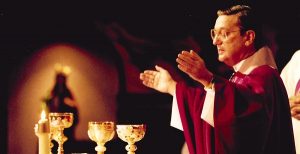
Diocese of Cleveland
Anthony Pilla, Bishop of Cleveland Catholic Diocese for 26 Years, Dies at 88
by Sam Allard, Cleveland Scene 9/22/2021
The link is here
Cleveland.com article (firewall)
Bishop Anthony M. Pilla, Cleveland native who guided Northeast Ohio Catholics for quarter-century, dies at 88
by David Briggs
The link is here