Welcome to Teaching Cleveland Digital phase 2
Here is the original site
Unfortunately it was an old platform and the time had come to move on
Also unfortunately all of our links from google are lost too. But the search function works pretty well. So just enter the topic you want to find in search and it should should pop up
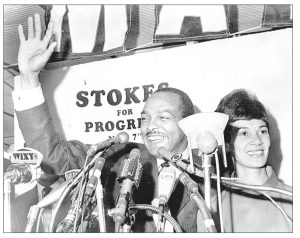
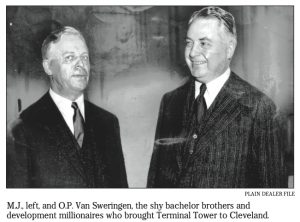
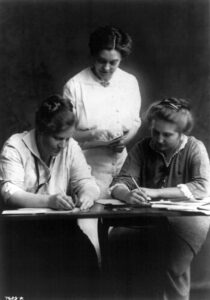
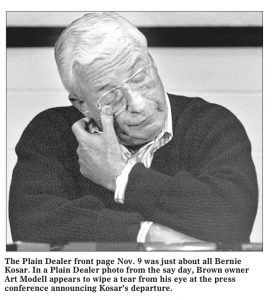
Thank you for your patience. Click on the photos below if you want more content on the people shown or use Google with a topic and “Teaching Cleveland” in search.
This link takes you to a search button
This link takes you to a recommended 5 week reading list
This link goes to “Teaching Cleveland Stories”
Florence E. Allen, Elizabeth J. Hauser, and Greta Coleman
Cleveland Stories: An Informal Look at the City’s Past
A 5 Week essay-based syllabus suggested by Dr. Marian Morton, professor emerita at John Carroll University with expertise in Cleveland area history.
Overview: A discussion of some of Cleveland’s most interesting and important people, places, and events Objective: To link the city’s past with its present policies, politics, and practices
General questions: what is the main point of each article? Did you agree or disagree? What did you find most interesting? What would you add? Or subtract?
Half a century ago, the streets of what is now one of the most robust corridors in downtown Cleveland were nearly empty — aside from the wrecking ball parked on Euclid Avenue, ready to topple the historic theaters that made up Playhouse Square.
“No one was there. You could play badminton on Euclid,” said Joe Garry, the founder of Cleveland State University’s theater program. “People would proudly say, ‘I haven’t been in the city for 10 years.’”
The performing arts industry had fallen into a death spiral. The high-capacity, ornate theaters were built in the early 1920s when Cleveland was among the most populated U.S. cities to accommodate what Playhouse Square CEO Craig Hassall called a “high cultural appetite.”
But following a post-World War decline of vaudeville touring circuits and a massive exodus to the suburbs, most of Playhouse Square’s five historic theaters — the Palace, the State, the Ohio, the Allen and the Hanna — fell into disuse and disrepair.
“Four of them, except the Hanna, had ceased operating by the 60s, and they were pretty much derelict,” Hassall said. “There were pigeons living in them, the roofs had fallen in, there was a flood, and a fire in the Ohio, which pretty much destroyed the whole theater.”
And with the theater district went the rest of downtown.
“As they started to become less used and more abandoned, the downtown became a bit more sketchy as well,” Hassall said. “So it wasn’t a place you’d want to come down to. It was pretty dirty and dangerous, and there wasn’t much here.”
The theaters were set to be razed and converted into surface parking lots to accommodate the suburbanites coming into the city for work.
A Plain Dealer article about the demolition of some of Playhouse Square’s historic theaters in 1972. (Courtesy of Playhouse Square)
But a handful of artists were determined not to go down without a fight.
“There was no pretense other than we couldn’t let it die,” said Garry,now 85 years old,who was among one of the theaters’ saviors. “That was the mantra, I think.”
Around that time, Garry was directing a production of “Jacques Brel is Alive and Well and Living in Paris,” a musical revue featuring English translations of songs by the Belgian singer-songwriter Jacques Brel, in a 500-seat lecture hallat CSU.
Raymond Shepardson, whom Garry lovingly called the “madman” credited with saving the theaters, sat in the audience beside Garry’s mother.
Raymond Shepardson, the artist credited for saving Playhouse Square’s historic theaters, at a performance of “Jacques Brel is Alive and Well and Living in Paris.” (Courtesy of Playhouse Square)
“He’d been after me to do something in the [State Theatre] lobby,” Garry recalled, saying he didn’t think it would work. “And my mother told me the next morning we were having company, and she said, ‘I invited that nice man I sat next to,’ and I said, ‘He’s crazy. Are you crazy?’
“And so he came to the house, and he talked us into doing it that morning.”
The pair assembled a team that included Oliver Henkel, a lawyer tasked with tapping into the business community to save the theaters, and Lainie Hadden, the then-president of the Junior League of Cleveland, who used her connections to bring in influential people and audiences, as well as droves of CSU students and volunteers.
“He was a f***ing madman,” Garry said of Shepardson. “You have to understand, he was crazy, and you had to fall in love with his craziness, so he wasn’t the perfect front person for a very conservative business audience.”
Garry said they understood that in order to save the theaters, they needed buy-in from local banks and foundations.
But first, they had to prove there was still an appetite for live theater. They opened the show on April 18, 1973, without certainty or expectations.
“Early on… there was no money, and we literally had to count the house every night to make sure there was enough to pay everyone and to do the show the next day,” Garry said.
“We hoped that it would run three weeks… and you know, it ran two and a half years.”
Garry said the success, which he described as a “fairytale,” was proof of something bigger than their production.
An audience gives a standing ovation after a performance of “Jacques Brel is Alive and Well and Living in Paris.” (Courtesy of Playhouse Square)
“Everyone had a memory of those spaces. It had a collective history,” Garry said. “People were also hungry to restore the city they loved.”
From there, Garry went on to produce another show in the neighboring lobby of the Palace Theater, while Oliver Henkel used his legal expertise to stop the demolition, negotiate the rights to buy the spaces and build a strong board. He later became the first president and board leader of the Playhouse Square Foundation.
“I worked in a theater environment at Cleveland State where I never had money,” Garry said. “I had to use forces other than money, like sheer will, to make something happen, and that isn’t bad. But when you move into the realm of Playhouse Square, it has to be much bigger than that, and they were able to hire the right people at exactly the right time, and they made very, very smart choices.”
Joe Garry directed the production of “Jacques Brel is Alive and Well and Living in Paris” credited with saving Playhouse Square’s historic theaters. (Abbey Marshall)
Playhouse Square’s revitalization over the following decades transformed it into a major downtown anchor generating $359 million in local economic impact. Arts advocates point to it as a case study for how investment in the arts can revitalize urban cores and catalyze economic development.
“The arts have always saved cities. It’s not a new idea; it’s an ancient idea,” Garry said. “The Greeks had the great good sense of building their greatest art structures, the amphitheaters, and they became the meccas of religion, art, community, everything.”
That theory has since been validated by urban planners studying downtown revitalization nationally.
“If we give people a reason to linger in a district, they’re more likely to stop and have a bite to eat, have a drink,” said Erika McLitus of the San Francisco Bay Area Planning and Urban Research Association (SPUR). “There’s a lot of pedestrian foot traffic because people have a reason to come and stay, so it also feels safer because there are eyes on the street.”
McLitus co-authored “Culture as Catalyst: How arts and culture districts can revitalize downtowns,” using Cleveland’s Playhouse Square as an example of how cities can use arts investment to rethink and retool downtowns post-pandemic.
“Art and artists and the experiences they create, and the experiences that they add to neighborhoods, the cultural assets that they maintain, do a lot more than just generate revenue. They strengthen our social bonds,” McLitus said. “They create a sense of place in a neighborhood.”
McLitus and co-author Sujata Srivastava also credited Cuyahoga County’s arts funding model, which is believed to be the only place in the country that directs cigarette tax revenue to the arts, as a means to “cultivate cultural assets that serve as economic and social anchors.”
“Cleveland’s journey from minimal public investment in the arts to hosting one of the nation’s largest arts funds is a testament to the power of grassroots advocacy,” they wrote in their 2025 paper.
The state has also backed that bet with policy: since 2009, Ohio has provided a 30% tax credit to TV, film and other media producers on in-state spending. It’s an incentive that has attracted not only major Hollywood productions to film in Cleveland, such as “Captain America: Winter Soldier” and James Gunn’s “Superman,” but also theatrical productions.
In 2023, Playhouse Square successfully lobbied the state to carve out $5 million out of that $50 million pot specifically for theater, setting up the performing arts district to become one of the most powerful launchpads for Broadway tours.
“Jacques Brel is Alive and Well and Living in Paris” premiered in April 1973 in the lobby of the State Theatre. (Courtesy of Playhouse Square)
“People often write the arts off because it’s very touchy-feely,” Hassall said. “But actually, there are business principles that are fascinating. … It’s not called show ‘business’ for nothing.”
Hassall said the seemingly enthusiastic support from Clevelanders and local foundations to keep supporting the arts is encouraging at a time when Broadway faces tremendous post-pandemic financial headwinds.
“The cost and the risk of getting a show up on Broadway now is so eye-wateringly huge that it’s a disincentive to investors and therefore producers to create new works for Broadway, and that’s very bad for us,” Hassall said.
So Playhouse Square is expanding its reach. In addition to its 40,000 annual subscribers, it also partners with the University of Akron to put on shows for more than 2,300 season ticket holders at E.J. Thomas Hall.
They’ve also become a major real estate powerhouse, controlling 2.5 million square feet of real estate that generated more than $27 million in revenue for the Playhouse Square Foundation in 2024.
And Hassall is already thinking ahead to Playhouse Square’s next chapter.
“The theaters were saved by Clevelanders, supported and funded by Clevelanders, now attended by Clevelanders,” Hassall said. “We’d love to see it become a real district of entertainment where you might just come down on a Friday night, have a few beers, sit on the lawn, hear some live music, see some jugglers or whatever you know, and just have a nice time in the neighborhood.”
Irishtown Bend under construction. [Photo courtesy of James C. Sulecki]
With the coming of Cleveland Metroparks’ Irishtown Bend Park, this historic turn of riverfront is about to become a shining example of a new era for Cleveland: less populous but greener; freshly forward-looking, but ever mindful of its past.
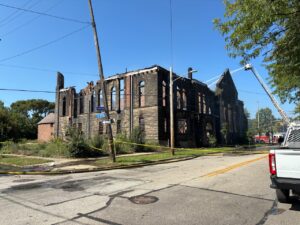
Friendship Baptist Church on Cleveland’s East Side lost its roof in a devastating fire early Friday morning. The fire caused an estimated $500,000 in damage, officials said. -Olivia Mitchell
Major fire rips through historic Baptist church on Cleveland’s East Side
The church became a hub for civil rights movement gatherings in the area and in 1953 hosted performances by Bobby Womack and Sam Cooke’s Soul Stirrers.
by Olivia Mitchell, Cleveland.com, August 21, 2026 The link is here
An airplane takes off from Burke Lakefront Airport on Cleveland’s Lake Erie shore in March 2026. Credit: Nick Castele / Signal Cleveland
‘We’re not giving up’: Cleveland will keep trying to close Burke Lakefront Airport despite resistance from FAA, Moreno Mayor Justin Bibb’s deputy chief of staff says City Hall is ‘just as dogged’ as before in pushing to close the airport, which occupies 450 acres on the Lake Erie shore.
by Nick Castele, Signal; Cleveland, August 18, 2026 The link is here https://signalcleveland.org/cleveland-burke-lakefront-airport-closure-bibb-faa/
A decade-long Port of Cleveland plan for freight ferry service to Ontario will soon be realized
By Zachary Smith
July 30, 2026 03:30 PM EDT
The Port of Cleveland is embarking on a first-of-its-kind scheduled freight ferry service across Lake Erie to Canada.
The Port signed a memorandum of understanding for a new cross-lake truck ferry service with Milo Harbor Inc, expected to launch in 2028.
It has been a plan 10 years in the making, according to David Guthiel, chief operating officer for the Port of Cleveland.
“This idea behind this was to take trucks hauling 48-foot trailers of cargo off the highway,” Guthiel said. “We’ve had interest on our side and had to find an entity in Canada willing to do this with us.”
No other cross-border route currently exists in this capacity, though it has been studied by the U.S. Department of Transportation in the past.
Once operational, it would create a direct cargo connection across Lake Erie capable of moving 150 truckloads in either direction, for a total of 300 per day.
The service would provide manufacturers, shippers, trucking companies and logistics partners with a more direct alternative to the other two options of crossing the border in the region — notably the Windsor-Detroit gateway, which accounted for a quarter of all across-the-border Canada-to-U.S. merchandise trade, or via the Peace Bridge through Buffalo, New York.
The benefit to a route over the lake boils down to one thing for these transporters — saved time.
“If you’re a trucking company moving cargo from Cleveland to Ontario, you’re basically losing your driver for almost two days because it’s going to take you up to eight hours to get there, and then they have to take up to eight hours to get back.”
Guthiel also said that reducing the time trucks are on the road would yield fuel savings and reduced emissions.
To work, a cargo terminal would be established at Milo Harbor in Wheatley, Ontario. Once active, transportation would take between two and three hours each way.
In addition, the ports are working jointly on either chartering an existing vessel or commissioning one specifically for this purpose.
But existing infrastructure at both ports would limit the need for major new development, as both already offer industrial zoning, warehousing, cargo-handling equipment, and space for cargo operations.
However, investments in the future may look like customs and border-processing facilities, cargo terminal improvements, a roll-on/roll-off ramp for trucks and trailers and marine handling infrastructure to support barge operations.
Costs and limitations on cargo volume or hazardous materials are yet to be determined, Guthiel said.