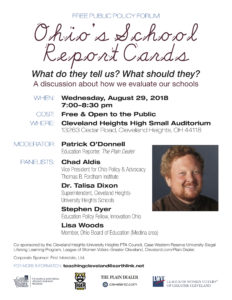
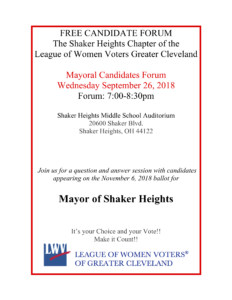
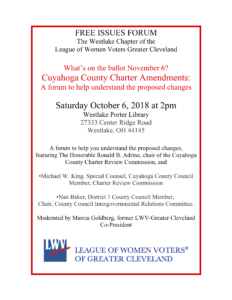
Wednesday August 29, 2018 7:00-8:30pm
“Ohio’s school report cards: What do they really tell us? What should they?: A discussion about how we evaluate our schools” moderated by Patrick O’Donnell, Plain Dealer Education Reporter
Panelists:
Chad Aldis, Vice President for Ohio Policy and Advocacy | Thomas B. Fordham Institute
Dr. Talisa Dixon, Superintendent Cleve Hts/Univ/ Hts Schools
Stephen Dyer, Education Policy Fellow, Innovation Ohio
Lisa Woods member Ohio Board of Education (Medina area)
Cost: Free & Open to the Public
Cleveland Heights High School Small Auditorium
13263 Cedar Rd, Cleveland Heights, OH 44118
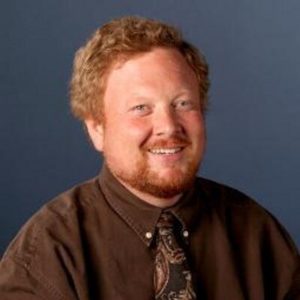
Patrick O’Donnell
Cosponsored by
Cleveland Heights University Heights PTA Council, Case Western Reserve University Siegal Lifelong Learning Program, League of Women Voters-Greater Cleveland, Cleveland.com/Plain Dealer
(The author, a senior in North House, has been active in Cleveland politics for several years as a member of U.S. Congressmen Louis Stokes’ staff. He recently returned from Cleveland where he spent ten days working for the black Independent candidate, Arnold Pinkney.)
As if anyone of needed further convincing, the recent Cleveland mayoral election illustrates the rapid demise of that city from “The Best Location in the Nation” to “The Mistake on the Lake.” Through a strange concatenation of events which made the political prognosticators cringe with shame, law-and-order candidate Ralph Perk became Cleveland’s first Republican mayor in 35 years by winning an election dominated by the Democrat who was leaving office.
Responsibility for Perk’s victory must lie with Mayor Carl Stokes’ unsuccessful political maneuvering, maneuvering which only heightened already existing anti-black and anti-Stokes sentiment in the city. For in his bid to gain nationwide political power by demonstrating his ability to weld a citywide coalition of blacks and liberal whites, Stokes committed the cardinal sin of permitting his political vision to become obscured by ego considerations. Stokes grossly overestimated his ability to manipulate the black vote, and his success during the primary in personally crushing his chief tormentors ultimately resulted in the defeat of his chosen successor.
To comprehend the results of the election, it is necessary to understand some of the underlying factors which have made Cleveland politics so volatile and unpredictable. The infamous Cuyahoga River, distinguished by its ability to catch five, dividers the city east-west, black-white. Some 40 per cent of Cleveland’s eligible voters are black, and almost all of them reside on the East Side. There is very little interaction across the river in this polarized community. In 1967, and again in 1969, Stokes was elected mayor in close two-man races by carrying a solid 95 per cent of the black vote as well as 18 per cent of the white vote. But despite the fact that three-fourths of the City Councilmen were Democrats, most of them were white who consistently voted against the Mayor.
Stokes was confronted by two white Council Presidents who were determined to demonstrate that they, and not the Mayor, were the most powerful men in the city. The first was James Stanton, now a U.S. Congressman, and the second was Anthony Garofoli, stanton’s protege. For three years Cleveland’s political scene was dominated by the personal struggle between the egos of Carl Stokes and Jim Stanton. The feud sometimes took the form of confrontations over concrete issues, such as public housing on the West Side, but more often than not the differences were personal rather than political. Stanton was able to maintain a solid majority of white Democrats and Republicans in Council who followed a policy of opposing and embarrassing the Mayor on every issue. Strokes in turn lost no opportunity to accuse Stanton and his cohorts of blatant racism.
Despite the fact that it was Stanton’s unrelenting struggle for power which was most responsible for the stalemate that thwarted progress. Cleveland’s citizens began to turn against the Mayor. However, Stokes must shoulder a large amount of blame for his decline popularity. Unwise administrative appointments and scandals in several departments caused widespread resentment. Possibility the worst move of all was the appointment of a new Police Chief who was forced to resign nine days later when strong evidence revealed he was linked to the Detroit Mafia. Scandals in the Civil Service Commission and the Department of Weights and Measures contributed to a growing feeling among whites that Stokes was getting rich off the city. A gut feeling that someone is a crook cannot be destroyed by factual evidence, and the power of rumors of Stokes’ supposed financial misdeeds was incredible. In addition, white paranoia manifested itself in widely-circulated stories of Stokes’ alleged relations with white women.
But it was the issue of law and order which inspired the bitterest the Mayor and the Police Department had been bad ever since the Glenville riots when, after several policemen had been killed, stokes ordered all patrolmen out of the area. The move was successful in preventing more deaths, but the wholesale looting that followed the withdrawal of law enforcement officials angered many whites. The deep-seated antipathy between white policemen and blacks which has now become the norm was increased. During the 1969 election non-uniformed uninformed policemen with guns dangling openly at their sides served as challengers at the polls in black wards in an obvious attempt to intimidate black voters.
To smooth out relations between himself and the Police Department, Stokes appointed as Safety Director retired General Benjamin O. Davis, the highest ranking black in the Air Force. Davis proved to be one of the few law-and-order blacks in the country, and constantly sided with the police. Six months later he resigned, charging that Stokes and his Administration had given aid and support to “enemies of law enforcement.” When pressed, Davis produced a list containing the names of several black militants and black organizations. He also fingered the weekly newspaper of the black community which had committed the grievous crime of printing a picture of Davis with the caption: “Benjamin O. Davis–Safety Director?” The fact that $10,000 of the funds in the “Cleveland Now” program, funded by business and private contributions to aid community development, ultimately was used to stock the arsenal of the black organization most responsible for the Glenville riots destroyed any hope for further community cooperation. The Stokes Administration’s failure to insure basic protection became an over-riding issue from then on.
When Stanton left Council at the end of 1970 to assume his duties as Congressman, he maintained control through his handpicked successor, Garofoli, Stanton would come to Cleveland every Monday morning and spend a couple of hours with Garofoli planning strategy for that night’s Council meeting. Garofoli, whose eyes were already on the Mayor’s job, kept up the running feud with Stokes. The situation became so bad that the Mayor and his Cabinet walked out of a Council meeting last spring and didn’t return for a month. Stokes felt that Council was not according him the respect he deserved, and city business was placed in a state of suspended animation as a result.
With four years of controversy and frustration behind him, and facing the distinct possibility that he might lose, it was not surprising when Stokes announced late in the spring that he would not seek re-election. He recognized as well as anyone that the city could no longer move forward under his direction, since the forces arrayed against him were too great. But as he withdrew, he made it clear that he would play a major role in the selection of his successor. His favorite was Arnold Pinkney, the black School Board President who had served as Stokes’ administrative assistant. Because most of Cleveland’s black political leaders, led by the Mayor and his brother, U.S. Congressman Louis Stokes, had withdrawn from the county Democratic Party because of the absence of blacks at the policy-making level. Pinkney chose to run as an Independent. The feeling prevailed that he would stand a much better chance in a three-man race where the white vote would be split.
ADVERTISEMENT
The struggle for the Democratic nomination was between Garofoli and James Carney, a multi-moderately liberal leanings. Stokes and Carney were very close, since the latter had been a major financial backer in the Mayor’s previous campaigns. All indications pointed to a runaway victory for Garofoli in an election to be decided by white Democrats. But Carl Stokes saw an opportunity to personally defeat Garofoli (and Stanton), and to get back at those who had been his bitterest opponents, the men who had refused to accord him “basic respect.” Over the last weekend of the primary campaign, a taped message from Stokes was mechanically telephoned from Carney headquarters into the home of every black voter in the city, instructing the residents to go to the polls and vote for Carney. The message didn’t even have the familiar “This is a recording” tacked on at the end, with the result that many blacks thought they were speaking directly to the Mayor. It was not too difficult to stir up the anger of blacks against a man who had attempted to water down the city’s strong equal employment opportunity clause because he felt it was costing too much money to insure that blacks were working on city-leased contracts. Strokes’ effort won the primary for Carney as 50,000 blacks flocked to the polls and gave their overwhelming support to the millionaire.
The seeds of Independent Pinkney’s defeat were sown at the same time Stokes was rejoicing at Carney’s victory. Immediately after the primary, Stokes elatedly proclaimed that the way was now cleared for a race between “two gentlemen.” And in words that would come back to haunt him, he added, “I am discounting the man who raised our real estate taxes, Mr. Perk.” For despite every effort to switch black votes back to Pinkney, including two letters and another recorded message from the Mayor, the inroads that Carney had made in the black community could not be counteracted. Stokes badly underestimated the resistance of black citizens to his efforts at manipulating them, as well as the problem of logically explaining to people why they, should vote for a candidates in September and against him in November.
The ultimate beneficially of Strokes’ miscalculation was Perk, the man whom the Mayor “discounted.” Perk would not have stood a chance against Garofoli, since the latter would have carried traditional Democratic areas. With Carney as an opponent, however, Perk could count on a large Democratic crossover. He was able to equate both of his opponents with Carl Stokes, and therefore capitalized on the white backlash. The anti-Stokes support that would have gone to Garofoli now gravitated to Perk. While both Pinkney and Carney were unfolding detailed plans to help cure the city’s financial problems. Perk based his entire campaign on a law-and-order, anti-corruption, anti-Stokes platform. In a city beset by critical problems of health, housing, and unemployment. Perk had the gall to stand before the City Club four days before the election and announce that his number one priority was improving recreation facilities. He and Carney spent the campaign throwing mud at each other, and Perk’s aim proved better. Carney accused Perk of gross negligence in his capacity as County Auditor. The charge was valid, since Perk was in charge of the recent tax reappraisal which was so badly run that it generated 48,000 complaints. But Perk, who had stated at the time the reappraisal was begun that he assumed full control and responsibility, responded by saying that he had no control over the process. Perk shot back by dredging up a twenty-year old scandal involving Carney and his brother John, the County Auditor before Perk, and casting doubt on the methods which Carney employed to amass his fortune. Time and time again Perk accused Stokes of manipulating the election by putting up two candidates, while emphasizing that he, Perk, was his own man.
Carney was compelled to act like two different people in order to implement his strategy of running second everywhere and winning. His ads on black radio stations which carried the message “Jim Carney may not be a brother, but he’s got soul” were aired at the same time he was pandering to anti-black sentiments on the West Side. As it turned out Carney-West, with the result that the combined effort was a dismal failure. A scant three days before the election, the Cleveland Plain Dealer predicted that Carney would edge out Pinkney, with Perk finishing a poor third. What actually occurred was that Perk won handily with 38.7 per cent of the total, beating Pinkney by 16,000 votes. Pseudo-brother Carney finished third with only 28.7 per cent. Carney took 20 per cent of the black vote, but lost to Perk by a 3-2 margin in white areas. Pinkney’s efforts on the West Side, which took up a large portion of his campaign, proved futile as he received an abysmal 3 per cent of the white vote. The racial polarity within Cleveland is documented by the elections returns. In West Side wards, where Perk polled 4,000-6,000 votes and Carney polled 2,000-4,000. Pinkney received such impressive totals as 148, 153, and 160. In the black wards on the East Side, where Pinkney garnered 4,000-7,000 votes, Perk was held to under 500, Carney consistently received 1,000-2,000 votes in the black wards, attesting to the failure of Round 2 of Stokes’ eleventh-hour manipulations. Carney’s strong showing in the black areas and his dismal showing in the white ones, coupled with an unusually high turnout on the West Side and in East Side ethnic wards, turned a supposedly tight Carney-Pinkney race into a stunning Republican upset.
It seems fairly obvious that in a race between Pinkney, Perk, and Garofoli. Pinkney would have pulled close to 95 per cent of the black vote as well as a good number of liberal white votes. Since the two conservatives would have competed for the same anti-Stokes votes. Pinkney would have won. In politics you win some and you lose some, but this was one that shouldn’t have been lost.
Hopefully, something positive may emerge from the despair that surrounds Cleveland’s black and liberal camps. The present county Democratic Party (from which the black leadership withdrew a year and a half ago) is dead, and a new one which will not commit the fatal error of ignoring black political strength, will have to arise if the city is to recover from what will surely be two years of regression. Carl Stokes’ political star is badly tarnished, and what role he will play in future national affairs is anybody’s guess. The lesson he learned about permitting ego gratification to obscure political vision will be noted across the country, as will the hazards inherent in attempting to manipulate blocks of voters. In addition, the black power structure in Cleveland will be forced to reassess its position and remedy some weaknesses, since it is now clear that something more than inertia is necessary to maintain power.
As I rode the rapid transit on the way to the airport November 3 with a crowd of West Siders on their way home from work. I happened to catch a glimpse of the headlines of the Cleveland Press, which said it all: “Perk Vows Safe Streets”. A series of unique circumstances compounded by Stokes’ political myopia permitted the backlash to overwhelm the forces of progress in Cleveland.
The damage is doubly severe since from now on Cleveland’s mayoral elections will be non-partisan. The top two vote-getters in the primary will face each other in November, precluding the election of a Mayor by 39 per cent of the vote. Regaining control of City Hall can only be accomplished by the formation of a new majority coalition, and one can only hope that this coalition can be constructed in time to prevent Cleveland’s problems from reaching an incurable level
This forum (orig Sept 13 Heights Library) has been rescheduled for: Thursday Sept 27 The new location: Cleveland Heights Community Center
1 Monticello Blvd, Cleveland Hts 44118
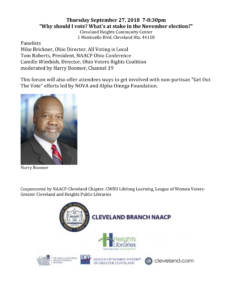
Thursday September 27, 2018 7pm “Why should I vote? What’s at stake in the November election?” Cleveland Hts. Community Center, 1 Monticello Blvd, Cleve Hts 44118
Panelists
Mike Brickner, Ohio Director, All Voting is Local
Tom Roberts, President, NAACP Ohio Conference
Camille Wimbish, Director, Ohio Voters Rights Coalition
moderated by Harry Boomer, Channel 19
This forum will also offer attendees ways to get involved with non-partisan “Get Out The Vote” efforts led by NOVA and Alpha Omega Foundation.
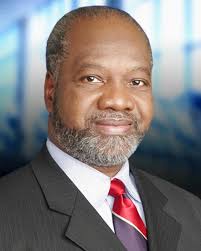
Harry Boomer
Cosponsored by NAACP-Cleveland Chapter, CWRU Siegal Lifelong Learning, League of Women Voters-Greater Cleveland and Heights Public Libraries
Issue 1 forum video from City Club of Cleveland
Monday October 8, 2018
Judge David T. Matia and Stephen Johnson Grove, Deputy Director for Policy, Ohio Justice & Policy Center explain.
moderated by Rick Jackson, Ideastream
Silvana Ferri, adult at center, receives a group hug from kids at the Cleveland Children’s Academy in October 2010 after the surprise announcement that she’d won a national $10,000 Early Childhood Educator Award.
(Thomas Ondrey, The Plain Dealer, File, 2010)
In his powerful eulogy of Louis Stokes, the Rev. Otis Moss Jr. repeatedly marveled that the longtime congressman was able to “rise above his circumstances,” escaping a life of poverty for one filled with memorable accomplishments.
The single most important requirement to rise above those circumstances, to earn that ticket out of life in the projects, was education.
Lou and Carl Stokes both spoke often of their mother, Louise, and her relentless focus on the subject.
“My mother had scrubbed floors, cleaned clothes and served dinners in order to make a life for us,” recalled Stokes, in an interview at his home just a month before his death Aug. 18 at the age of 90. “When you felt those cold hands and calluses, you began to understand what she was trying to say to us in terms of getting an education.”
It’s a common theme, especially among successful minorities who grew up poor.
Former Cleveland City Council President George Forbes, the last of eight children born in a segregated Memphis, talks similarly of his mother — “she was a great lady; to this day, I miss my mother” — sending her children north, where they would have a better chance to earn an education beyond high school.
And though a mother’s obsession with the future of her children is hardly unique to any culture, for children who grow up in poverty — especially black children — history tells us that education is pretty much the only way out.
The evidence is overwhelming. Consider the most successful black elected officials of the last 50 years:
Virgil Brown, Lloyd Brown, Charles Carr, Forbes, Marcia Fudge, Frank Jackson, Leo Jackson, Perry Jackson, Stephanie Tubbs Jones, Peter Lawson Jones, Arnold Pinkney, the Stokeses, George White and Mike White.
Every one of them went to college. Most earned two degrees. Lawson Jones went to Harvard. Mike White was the first black student body president of Ohio State University.
Over time, Mayor Frank Jackson’s school reform plan — with a huge assist from the Cleveland Foundation, the Gund Foundation and corporate leaders — will bring incremental improvements in student performance. There are more good schools in Cleveland today than there were four years ago.
Last year’s statewide report cards showed that Cleveland school students were learning a bit more. Nevertheless, Cleveland still ranked a dismal 607 out of the 610 districts.
That same report card showed that nine of the state’s 14 worst-performing school districts are in Northeast Ohio. Six of the 14 are in Cuyahoga County.
This year’s statewide report cards are likely to provide more documentation that efforts to fix Cleveland schools are enjoying a degree of success. But expecting “transformational” results anytime soon is unrealistic, especially given Cleveland’s daunting poverty rate.
The 1970 census found that 17.1 percent of Cleveland’s 750,903 residents lived below the poverty line. A census update issued last year estimated that 35.4 percent of Cleveland’s 389,521 live below the poverty line.
So, while the city’s population is barely half what it was 45 years ago, its poverty rate has more than doubled.
I’ve been on this soapbox for a decade now, but the single best investment Cuyahoga County can make in its future is a massive investment in early childhood education.
Free, high-quality preschool for needy 3- and 4-year-olds, coupled with intensive parental mentoring and effective programs to reduce the alarming rate of births out of wedlock, might be the only way out.
History tells us County Executive Armond Budish is no risk-taker. But I believe Budish has concluded that a huge expansion of early childhood education should be his signature accomplishment as county executive.
If Budish wants to leave a legacy of change and accomplishment, he’ll ignore his cautious instincts and seize the moment.
So staggering is the cost of our underinvesting in the education of poor children that economists of all political persuasions, including Nobel laureate James Heckman, have concluded that quality preschool will, over time, save taxpayers trillions.
And Port Clinton native Robert Putnam, former dean of Harvard’s Kennedy School of Government, argues in his phenomenal best-seller, “Our Kids: The American Dream in Crisis,” that “to ignore these kids violates our deepest religious and moral values” and “undermines our democracy and perhaps even our political stability.”
“Our Kids” should be required reading for every elected official. Members of Gov. John Kasich’s administration should have read it last year, before squashing a budget proposal by state Sen. Peggy Lehner to increase funding for high-quality preschool by $100 million.
That’s the Team Kasich way. If it’s not their idea, it can’t possibly be a good one.
“Of all the things we can do, the biggest single one is early childhood education,” Putnam said in an interview this spring.
With it, thousands of Cuyahoga County’s poor kids might just have a shot. Without it, most probably won’t.
A proud man, Lou Stokes enjoyed all the deserved attention that came his way late in life. But my guess is he’d gladly take his name off all those buildings that bear it in exchange for an investment that offers the poor kids in Cuyahoga County an opportunity to rise above their circumstances and lead better lives.
Brent Larkin was The Plain Dealer’s editorial director from 1991 until his retirement in 2009.
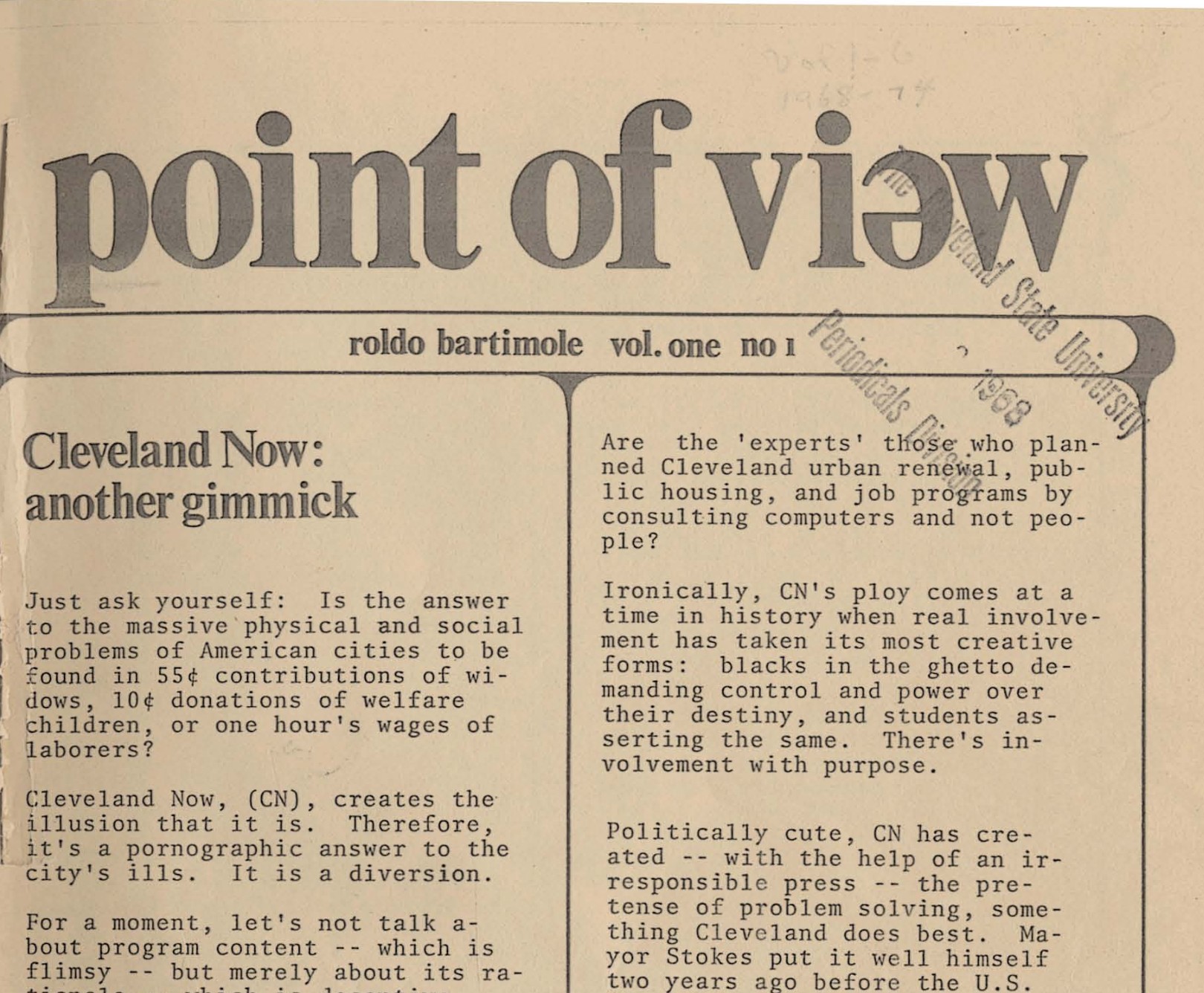
The day Roldo Bartimole turned 35—April 5, 1968—a crisis of conscience struck him. Martin Luther King had been assassinated the night before, and riots had broken out in major US cities. Bartimole, a Cleveland journalist who’d gone to the 1963 March on Washington, attended a meeting between George Wiley, a civil-rights activist, and several Ohio college professors. He was appalled when the white professors asked Wiley when riots, not injustice, would end.
“It felt to me like things were as bad as they could be,” Bartimole recalls.
By day, Bartimole worked in TheWall Street Journal’s Cleveland bureau. He moonlighted as an anonymous writer for a Cleveland Council of Churches newsletter. At the nation’s moment of despair, he felt the need to do more.
So Bartimole actually made the move that countless reporters have fantasized about. He quit his newsroom job and started his own publication, a newsletter he named Point of View.
“I tried to tell the story that I saw as a reporter,” recalls Bartimole, “but knew would never be published in a traditional newspaper. So I had to invent something.” Typed after hours on a church’s IBM Selectric, printed on heavy-stock 11-by-14-inch paper, Point of View became the underground samizdat of Cleveland’s political, business, and journalistic circles.
Bartimole became Cleveland’s first alternative journalist—a role he continued for 50 years, until he called it quits this February, just before he turned 85. For 32 years, Bartimole’s Point of View, funded via subscriptions, combined media criticism with inside information and radical critiques of the local power elite. His solo reporting career inspired comparisons to I.F. Stone’s national weekly of the 1950s and 1960s. After retiring the newsletter in 2000, Bartimole continued as a columnist for the alt-weekly Cleveland Free Times and various local websites—always living on a very low income, the self-imposed price of independence.
“He was a real factor in the town,” says Michael D. Roberts, a longtime Cleveland writer and editor and Bartimole’s contemporary. “His criticisms were embarrassing, to-the-point, and he didn’t spare anyone.”
Like in many cities, Cleveland’s press is much more comfortable critiquing elected power than unelected power. Reading Roldo was the great exception. (Clevelanders always referred to him by his distinctive first name, shared with his father, whom his grandmother named after the hero of a cheap Italian novel.) Bartimole’s work instructed generations of local journalists in how business figures wield power out of sight, leveraging philanthropic dollars, campaign donations, and private meetings with top politicians to control the civic agenda. Though his relationship with mainstream media outlets was unfailingly acerbic, he encouraged young reporters to see the power behind City Hall.
“Don’t compromise,” Bartimole advised his younger readers at the end of his last column. “It’s not worth it and it’s not as much fun or as rewarding at the end. Challenge. Bend as little as possible. Make the bosses bend. They’re not that tough.”
I had a completely different view. My view was that racism and poverty were the cause of what was happening.
BARTIMOLE’S MUCKRACKING BEGAN in his hometownof Bridgeport, Connecticut. His damning reports from the city’s impoverished neighborhoods, which angered the city’s mayor, identified dangerous tenements where children later died in fires. Hired in 1965 by Cleveland’s morning newspaper, The Plain Dealer, Bartimole contributed to a series, “The Changing City,” that was one of the paper’s first frank examinations of urban renewal and what was then known as the black ghetto. His work stood out compared to the paper’s usual attitudes.
“There was a real current of racism,” says Roberts, 79, who was a Plain Dealer reporter in the ’60s. “The black community didn’t exist. You’d call in a story, and the editor would ask, ‘Is it a good address?’” Bad addresses were black neighborhoods, says Roberts, of little news value to the era’s editors.
Point of View debuted in the racial crucible of summer 1968. Many early issues burned with Bartimole’s fury at the city power structure’s treatment of black Clevelanders. After Cleveland’s Glenville shootout between police and black nationalists and the riots that followed—50 years ago this week—Bartimole excoriated police conduct and questioned official accounts of the shootout. “Who polices the police?” he wrote, prefiguring today’s debates about police accountability and use of lethal force. Point of View’s Glenville commentary contrasted with the coverage in Cleveland’s daily press, which generally accepted the police’s version of events.
“I had a completely different view,” recalls Bartimole. “My view was that racism and poverty were the cause of what was happening.”
Point of View’s second issue broke the news that Cleveland businessmen had paid black activists $40,000 to “keep the peace” in summer 1967. “Politics as social control,” Bartimole called it, noting that unrest could’ve scuttled Carl Stokes’s election in November 1967 as the first black mayor of a major US city.
Roberts says Bartimole’s reporting on local power players broke new ground. “He saw the business community sort of as the deep state,” Roberts recalls. Point of View delivered critical coverage of the Cleveland Foundation, the city’s largest philanthropic organization. It scrutinized the political and civic activities of business leaders such as Jack Reavis, managing partner of Jones Day, Cleveland’s largest law firm, and founder of the local Businessmen’s Interracial Committee on Community Affairs. “If you were at The Plain Dealer,” says Roberts, “you didn’t dare go into those waters.”
Bartimole believed business leaders got involved in civic affairs for selfish reasons, not benevolence. “Certain interests were making major decisions, and making them as self-interest,” Bartimole recalls. “Cleveland was a very institutional town, and still is.” Much of Cleveland’s wealth from its boom years in the 1920s is still left in the hands of foundations, Bartimole observes—“structures that keep an agenda going that favors those who have. Not much has changed.”
Point of View was also a journalism review, says Bartimole. His press coverage was inspired by the Chicago Journalism Review, founded by Chicago reporters in response to their editors’ apologias for police violence at the 1968 Democratic convention. Bartimole covered tensions between reporters and management at Cleveland’s dailies, the Plain Dealer and thePress. He printed killed stories and deleted grafs smuggled out of the Plain Dealer newsroom, including an exposé of local nonprofits’ interlocking directorships, deep-sixed by the publisher.
Roberts, the Plain Dealer’s city editor in the early ’70s, says he often thought Bartimole’s criticism of the paper was unfair. Disgruntled Plain Dealer reporters would use him, Roberts says, to get back at management.
But Roberts admired Bartimole’s dogged coverage of Cleveland politics. “He helped spark the way the two papers covered City Hall,” he recalls. “They couldn’t do a slipshod job, because he’d come out with what really took place. The town was lucky to have him.”
In the ’70s and ’80s, Bartimole frequented Cleveland City Hall and the Cuyahoga County Recorder’s office, where he’d find stories in newly-filed partnership records. In January 1982, Point of Viewreported that the Cleveland Press’s owner had transferred the paper’s land to a new partnership he controlled—a harbinger of the afternoon paper’s shutdown six months later.
Other Point of View stories came from tips on the street. “I walked around downtown a lot,” Bartimole says. “People, if they saw me, would stop and tell me something. They would never call me up to tell me that. But if they met me, they seemed almost obligated to want to tell me something.”
City Hall coverage included epic critiques of Cleveland politicians such as future congressman Dennis Kucinich, mayor from 1977 to 1979, and George Voinovich, mayor in the ’80s and later Ohio governor and a US Senator. Bartimole once confronted Voinovich at a City Hall food drive, grilling him about why he hadn’t opposed President Ronald Reagan’s food-stamp cuts more strenuously.
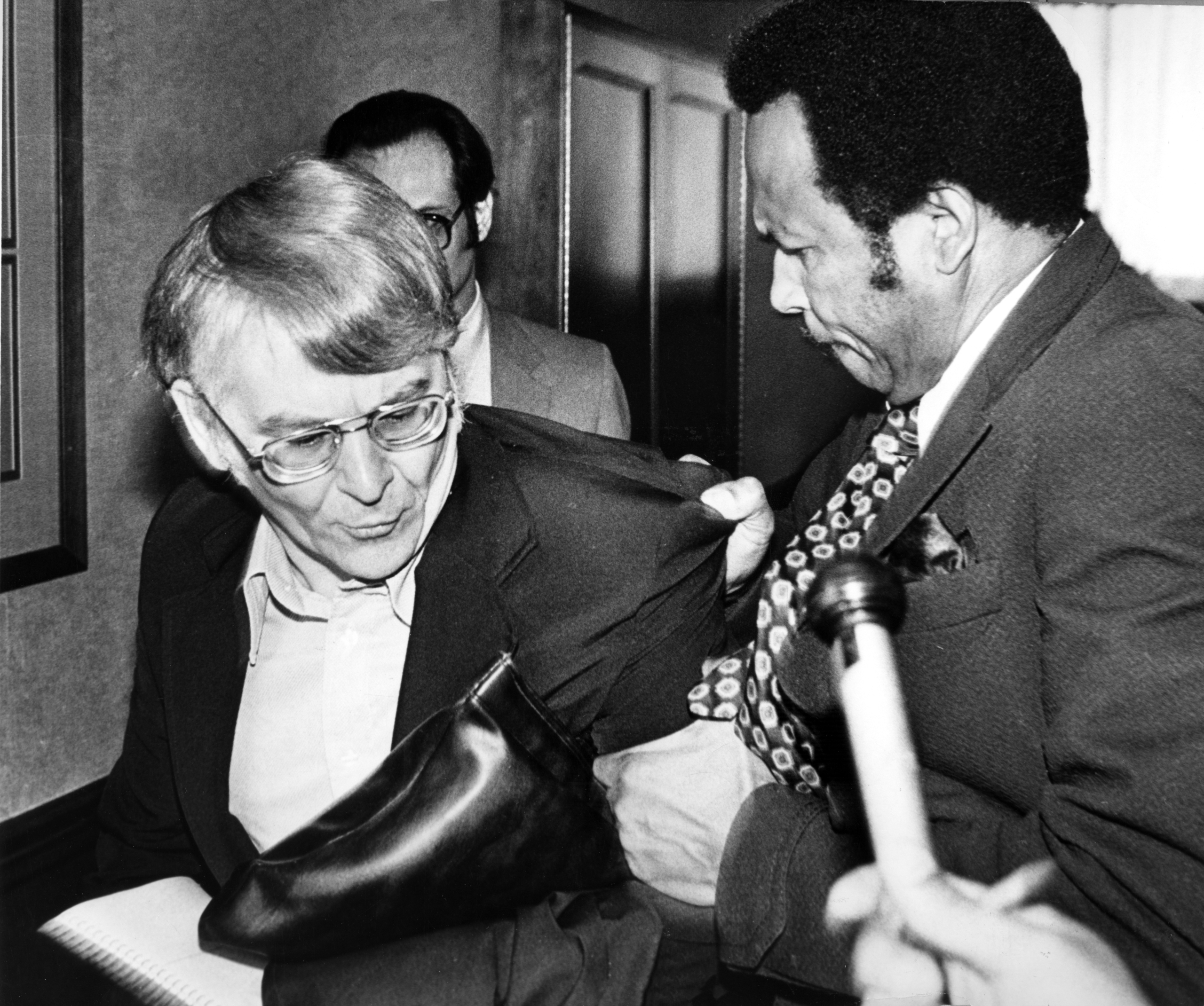
Bartimole’s most famed confrontation with a politician came in 1981, when George Forbes, Cleveland’s City Council president, forcibly removed him from a meeting. Bartimole felt Forbes was breaking Ohio’s sunshine law, and his refusal to leave more than made his point. “He just got really upset and grabbed me,” Bartimole recalls. “His misfortune was, he had all the media right outside the door, which was open.” Newspaper and TV cameras captured the scuffle. A photo of Forbes grabbing Bartimole by his suit has become one of the legendary images of Cleveland journalism.
George Forbes removes Roldo Bartimole from City Council meeting. Photo courtesy of the Michael Schwartz Library at Cleveland State University.
Though Point of View was widely read in government offices, newsrooms, and corporate boardrooms, widespread photocopying expanded its audience beyond its small circulation: about 500 at the start, peaking near 1,700 in the late ’70s, around 1,400 afterward. Annual subscriptions were $3 in 1968, $25 to $50 in 2000.
Independence meant extreme frugality for Bartimole. “He had virtually no money,” Roberts recalls. “He’d park his car in the cheapest place in town and walk a mile or two miles to get where he was going. I’d always call him a communist when I’d see him. He’d give me the finger.”
Bartimole says his annual income in the 1970s through the 2000s ranged from about $4,000 to $10,000 a year. “It was 32 years with not a lot of money,” Bartimole says. “How could you make any money on that?” For most of the ’70s, he drove a 1965 Volvo, even after it needed a push or a blow from a hammer to start it. At one point, Bartimole raised his three kids, alone, on his writing. He shrugs it off: They had a car, a fridge. “It wasn’t easy. My kids understood it. I think they are proud of it in some ways.” His children would help him stick mailing labels on the newsletters and bundle them for the mail.
Bartimole never considered rejoining a newsroom. “I felt what I was doing was important,” he says. “I could never feel comfortable in a regular job.” He feared compromising his independence. In the 1960s, he’d written a short-lived column for the city’s longtime black newspaper, the Call and Post, in exchange for the paper printing Point of View for free. But when the publisher refused to run a Bartimole piece critical of the local United Way, he walked.
At one point a Cleveland Press editor asked Bartimole to write a column. “I refused, because I knew what was going to happen,” he says. “I’d write one they didn’t want to run, and then I’d be out.”
I knew I couldn’t play a different role, clean things up, and go back on what I was writing.
IN THE 1980S AND 1990S, Bartimole started making more money by becoming a columnist for local alt-weeklies, first the Cleveland Edition and later the Cleveland Free Times. He continued Point of View, splitting his writing energies. It’s the only time he made a living wage, he says. “I was hurting myself, cutting into subscriptions,” he says. “But I got paid, and it was way more exposure.”
Bartimole became a sort of frugal populist, Cleveland’s fiercest critic of tax abatements for downtown development projects and public funding for stadiums. He opposed the 1990 ballot campaign to levy alcohol and cigarette taxes to fund the Indians’ baseball stadium, now Progressive Field, and the Cavaliers’ basketball arena, now Quicken Loans Arena. He printed lapel pins and bumper stickers calling out then–Indians owner Dick Jacobs: “Let Jacobs Pay,” they read.
At age 67, Bartimole began a long, slow retirement. He shuttered Point of View in 2000, but continued writing his column for the Free Times until it closed for seven months in October 2002. By the time the paper was revived as part of an antitrust settlement in May 2003, Bartimole had already moved his column to a black newspaper, the City News and Tab, where he wrote into the mid-2000s.
Even semi-retired, writing without pay for local websites such as Cool Cleveland, RealNEO, and Have Coffee Will Write, Bartimole decried the more than $1 billion in local tax money that’s gone to build and renovate Cleveland’s sports palaces. Sometimes it seemed like he was the only journalist in town who could explain how the complex funding worked.
A 2009 account of Bartimole’s walk through downtown Cleveland, unusually narrative for a writer who focused on facts and figures, catalogued the deals that had subsidized each new building. His tally ran to $660 million—with, he felt, not enough people on the streets to justify it. “Activity will come when people—the market—demand it,” he wrote. “You can’t force it even with almost free money.” That was heresy in Cleveland, which prides itself on its downtown’s subsidized comeback.
“There was no down-the-middle in how people viewed him,” recalls Roberts. “You either liked him for what he was doing, or thought he was a crackpot.”
Despite Bartimole’s career of castigating the city’s daily paper, Roberts lobbied his fellow Press Club of Cleveland members to induct Bartimole into their Hall of Fame in 2004. They agreed, reluctantly. Among other journalists, “he was not well-liked, generally speaking,” Roberts recalls. “He had a group of guys who were his friends, but the editors detested him. They asked, ‘Why take this guy in who’s been spending his career criticizing us?’”
Bartimole’s acceptance speech made Roberts cringe.
“I knew I couldn’t play a different role, clean things up, and go back on what I was writing,” Bartimole recalls, “so I slashed out at The Plain Dealer.” The outsider journalist dismissed local TV news as “essentially hopeless and headed south,” radio as “mostly irrelevant,” and The Plain Dealer as “too often put[ting] its readers and reporters to sleep” and spending more effort on food and sports coverage than “its coverage of who is doing what to whom.”
To Roberts and others in the audience, Bartimole’s speech was memorably mean-spirited. “He enjoyed that,” Roberts says. “He’s got an ego. That was one of the things that drove him.”
WHAT LEGACY IS BARTIMOLE LEAVING, in Cleveland or beyond? His own answer is modest. “One person doesn’t make that much of a difference,” he says. “It takes movements.”
But Sam Allard, a staff writer for the alt-weekly Cleveland Scene, disagrees. Allard, 30, wrote about Bartimole’s influence on Cleveland journalism for Scene this winter. “He took a real interest in mentoring and fostering younger journalists in Cleveland, myself included,” says Allard. “He was actively calling, emailing and setting up coffee dates.” Allard says Bartimole advised him on his 2017 coverage of an issue dear to the elder journalist: an activist group’s aborted battle against new public funding for Quicken Loans Arena. “One of the things he saw his role as was helping shape media discourse in town. He thinks it’s important to reach out to people who are crafting the narrative.”
In local journalism, calling out unelected power can make reporters uncomfortable and power brokers hostile. “One of the things that’s inspired me the most about Roldo,” says Allard, “is that he spent his entire career writing and reporting critically about people he interacted with regularly. It’s a lot more courageous to report critically about people in your town or community.”
Bartimole’s advice for young journalists trying to cover power in their city is simple. “Look at records, and look at who benefits and who pays,” he says. “Pick out, what are the institutions making decisions? How do certain things get before the public officials to ratify? Look at the organizations that are considered quote-unquote ‘good.’ What are they doing with their money? How are they collecting it?”
Unelected power brokers “come out when there’s certain crises and things have to be quote-unquote ‘handled,’” Bartimole says. “If you watch, you can see that happen. Who pulls certain strings at certain times?”
The flyer is here
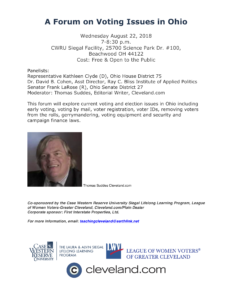
Wednesday August 22, 2018
“A Forum on Voting Issues in Ohio”
7pm-8:30pm
Panelists:
Representative Kathleen Clyde (D), Ohio House District 75
Dr. David Cohen, Asst. Director, Ray C. Bliss Institute of Applied Politics
Senator Frank LaRose (R), Ohio Senate District 27
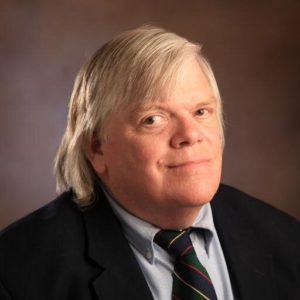
Moderator: Thomas Suddes, Editorial Writer, Cleveland.com
This forum will explore current voting and election issues in Ohio including early voting, voting by mail, voter registration, voter ID laws, removing voters from the rolls, gerrymandering, voting equipment and security and campaign finance laws.
Thomas Suddes, Cleveland.com
CWRU Beachwood Facility: 25700 Science Park Dr #100, Beachwood 44122
Cost: Free & Open to the Public
Cosponsors Plain Dealer/Cleveland.com. CWRU Siegel Lifelong Learning, League of Women Voters-Greater Cleveland.
Corporate sponsor: First Interstate LTD