Teaching Cleveland Welcome Page

Teaching Cleveland Welcome Page

Welcome to Teaching Cleveland Digital phase 2
Here is the original site
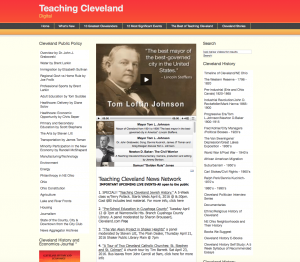
old-teaching-cleveland-image

Unfortunately it was an old platform and the time had come to move on
Also unfortunately all of our links from google are lost too. But the search function works pretty well. So just enter the topic you want to find in search and it should should pop up
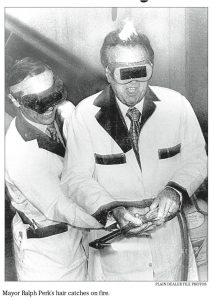
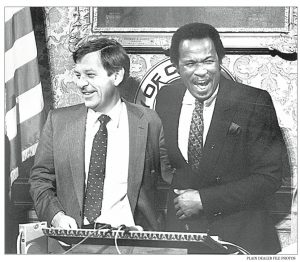
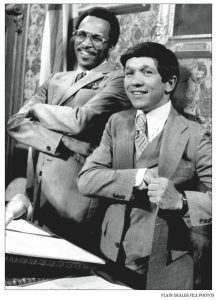
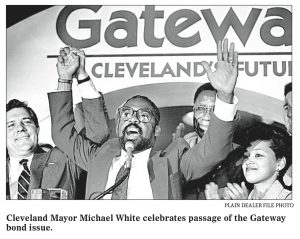
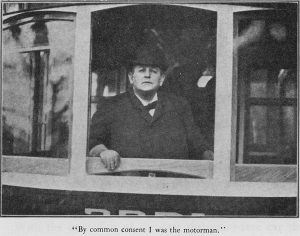
Thank you for your patience. Click on the photos below if you want more content on the people shown
or use Google with a topic and “Teaching Cleveland” in search.
This link takes you to a search button
This link takes you to a recommended 5 week reading list
This link goes to “Teaching Cleveland Stories”
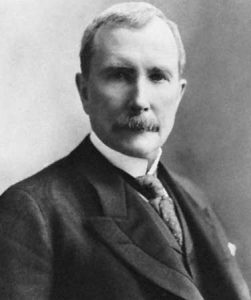
irocker001p1

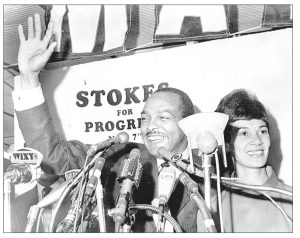
johnson-as-the-motorman  carl-stokes-wins-1967

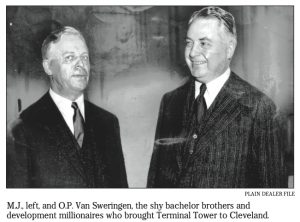
van-sweringens-1927

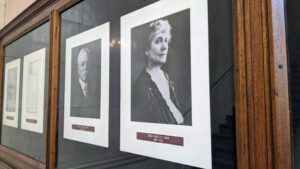
Florence E. Allen, Elizabeth J. Hauser, and Greta Coleman

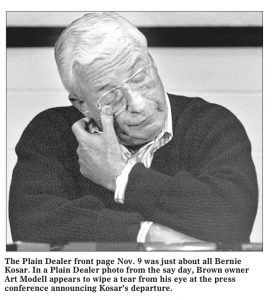
art-modell-1993

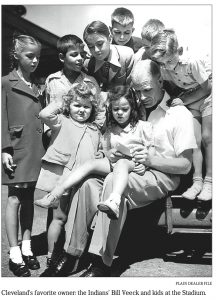
veeck-with-kids-1946

perk-on-fire-1972  voinovich-and-forbes-1986  kucinich-with-forbes

white-celebrates-gateway

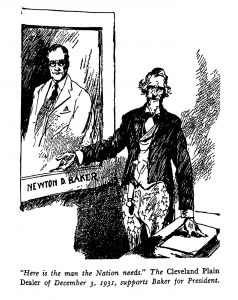
baker-for-pres-cartoon-pd

Cleveland History Self Study: A 5 Week Syllabus of Recommended Essays

Cleveland Stories: An Informal Look at the City’s Past

A 5 Week essay-based syllabus suggested by Dr. Marian Morton, professor emerita at John Carroll University with expertise in Cleveland area history.

Overview: A discussion of some of Cleveland’s most interesting and important people, places, and events
Objective: To link the city’s past with its present policies, politics, and practices

Week 1. Introduction. Read Teaching Cleveland Stories (TCS)John J. Grabowski, “Cleveland: Economics, Images, and Expectations”

Week 2. TCS: Mike Roberts and Margaret Gulley, “The Man Who Saved Cleveland.” Elizabeth Sullivan, “Immigration”  John Vacha, “The Heart of Amasa Stone”; Joe Frolik, “Mark Hanna: The Clevelander Who Made a President”

Supplemental: TeachingCleveland.org:
Connecticut Western Reserve Aggregation
Lorenzo Carter Aggregation
Moses Cleaveland Aggregation
Battle of Lake Erie/War of 1812 Aggregation

The Erie and Ohio Canals Aggregation
Amasa Stone Aggregation
Building the Railroads
Charles F. Brush Aggregation
Flora Stone Mather Aggregation
Henry Flagler Aggregation
Immigration Aggregation
James A. Garfield Aggregation
John D. Rockefeller Aggregation

Manufacturing in Cleveland Aggregation
Mark Hanna Aggregation

Philanthropy in Cleveland Aggregation
Samuel Mather Aggregation
Social Settlement Movement Aggregation

Steel Industry in Cleveland Aggregation
Transportation in Cleveland Aggregation
Timeline of Cleveland/NE Ohio;

Week 3. TCS: John J. Grabowski, “Cleveland 1912 – Civitas Triumphant”; Joe Frolik, “Regional Government versus Home Rule”  John Vacha, “When Cleveland Saw Red”  Margaret Bernstein, ‘’Inventor Garrett Morgan, Cleveland’s Fierce Bootstrapper”  Marian Morton, “How Cleveland Women Got the Vote and What They Did With It”

Supplemental: TeachingCleveland.org:

Tom L. Johnson Aggregation
Newton D. Baker Aggregation
Frederick Howe Aggregation
Maurice Maschke Aggregation
Ohio Constitution Aggregation
Regional Government vs. Home Rule in Northeast Ohio
Collinwood School Fire Aggregation
The Group Plan Aggregation
Eliot Ness Aggregation
The Van Sweringen Aggregation
Highway System Creation in Northeast Ohio
Black Political Power in Cleveland: Pre World War II
Public Housing/Ernest Bohn Aggregation
WPA in Cleveland Aggregation
Great Lakes Exposition Aggregation
John O. Holly Aggregation
Cleveland Orchestra Aggregation
Garrett A. Morgan Aggregation
The Metroparks Aggregation
Cleveland Clinic Origins Aggregation
Fred Kohler Aggregation

Week 4. TCS: Thomas Suddes, “The Adult Education Tradition in Greater Cleveland”  Bill Lubinger, “Bill Veeck: The Man Who Conquered Cleveland and Changed Baseball Forever”  Jay Miller, “Cyrus Eaton: Khruschev’s Favorite Capitalist” Roldo Bartimole, “One Man Can Make a Difference”  Mike Roberts, “Cleveland in the 1960s” and “Cleveland in the 1970s”

Supplemental: TeachingCleveland.org:
Carl Stokes Era as Mayor Aggregation
Cleveland Aggregation
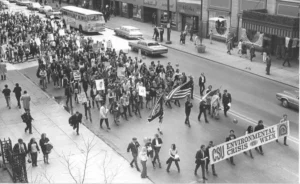
Cuyahoga River Fire Aggregation
Cyrus Eaton Aggregation
Frank Lausche Aggregation
Dennis Kucinich as Mayor Aggregation
Glenville Riots Aggregation
Hough Riots Aggregation
Kent State Shootings Aggregation

Lake Erie Aggregation
Martin Luther King in Cleveland Aggregation
Water Aggregation

Week 5TCS: Mike Roberts, “Cleveland in the 1980s” and “Cleveland in the 1990s” Supplemental: TeachingCleveland.org:
“10 Greatest Clevelanders”;
“12 Most Significant Events”;
Cleveland Politician Interview Series (George Forbes, Jim Rokakis, Louis Stokes, George Voinovich, Michael R. White); Mike Roberts,
“Cleveland in the 2000s

George Forbes Aggregation
George Voinovich Era as Mayor Aggregation
Louis Stokes Aggregation
Mike White Era as Mayor Aggregation
Playhouse Square Aggregation

General questions: what is the main point of each article? Did you agree or disagree? What did you find most interesting? What would you add? Or subtract? 


In 1964, Marshall Fredericks’ Fountain of Eternal Life in Cleveland Was Dedicated – by Vince Guerrieri June, 2026

Courtesy Cleveland State University. Michael Schwartz Library. Special Collections

In 1964, Marshall Fredericks’ Fountain of Eternal Life in Cleveland Was Dedicated

First imagined as World War II raged, Cleveland’s Mall memorial fountain took nearly two decades — and another war — to become reality.
by Vince Guerrieri, Cleveland Magazine, June 2026
The link is here

Judge Jean Murrell Capers was Cleveland’s first Black woman to sit on the city council, WEWS, March 29, 2026

Judge Jean Murrell Capers was Cleveland’s first Black woman to sit on the city council
Her ‘godson’, James Lamb, shares her story during Women’s History Month
by Mercy Sackor, WEWS,

Did you know Kent State students helped create Black History Month? -Akron Beacon Journal, Feb 12, 2026

Did you know Kent State students helped create Black History Month?
by Anthony Thompson, Akron Beacon Journal, Feb. 12, 2026
The link is here

Long before Black History Month became a national observance, the push to dedicate more time to honoring Black history was already taking shape in communities across the country – and would eventually find a defining moment on a college campus in Northeast Ohio in February 1970.

That year, Kent State formally designated the entire month of February as a campus-wide celebration of Black history, a decision driven by student activism and supported by faculty and administrators.

The move came six years before Black History Month was officially recognized at the national level in 1976, but it was built on decades of earlier efforts to expand the observance.

Woodson helped establish what is now the Association for the Study of African American Life and History in 1915 and, in January 1916, began publishing what would become “The Journal of African American History.”

In 1926, Woodson pioneered the celebration of Negro History Week during the second week of February to coincide with the birthdays of Abraham Lincoln and Frederick Douglass.

Over time, communities began stretching the celebration beyond a single week.

According to Newspapers.com, the phrase “Negro History Month” appeared as early as the late 1920s, and groups in Boston, Chicago, New York, Los Angeles and other cities sponsored monthlong events during the 1930s and 1940s – indicating the idea had been circulating long before it gained formal recognition.

“It is important to understand that Woodson was operating during a period of rising Black self-consciousness,” Okantah wrote in a previous column published in the Beacon Journal, pointing to movements such as the Harlem Renaissance and Marcus Garvey’s Universal Negro Improvement Association.

That same emphasis on controlling the narrative and preserving history would later shape student activism at Kent State.

“I arrived at Kent State University as a first-year student in September 1970, on the day campus reopened after the shootings that previous May,” Okantah wrote, describing a campus still marked by unrest and protest.

He recalled being “a naive, wide-eyed, anxious 18-year-old” who was quickly “swept up into BUS,” the Black United Students organization that had already staged protests and demanded what would become Africana Studies, the Center of Pan-African Culture and increased hiring of Black faculty and staff.

“I was groomed by upper classmen who had participated in the 1968 ‘walk-out,’” he wrote, adding that he was “mesmerized and in absolute awe of the militant group spirit they exuded.”

By the late 1960s, members of Black United Students were pushing to expand Negro History Week into a full month on campus, building on earlier community-based monthlong efforts and Woodson’s original framework.

When two students approached university leaders to propose extending the programming throughout February, Okantah wrote they were acting as part of a broader national movement and guided by the same philosophy as Woodson.

“Those who have no record of what their forebears have accomplished lose the inspiration which comes from the teaching of biography and history,” he wrote.

Kent State’s decision in February 1970 is said to mark the first time an institution formally designated the entire month of February as a celebration of Black history, helping solidify a model that would later be adopted nationwide.

Black History Month nationally, federally recognized

In 1976, the federal government formally designated February as Black History Month under President Gerald Ford, cementing a tradition that had already taken shape years earlier at Kent State and in communities across the country.

Reflecting on the legacy of that moment, Okantah wrote that the lesson remains clear: “We must tell our own story.”

Think the latest Browns debate was ugly? It was tame by 1996 standards, Cleveland.com Jan 3, 2026

Michael White, who was Cleveland’s mayor at the time, takes a tour of the Browns lakefront stadium in 1999. To White’s right is project director Diane Downing.Gus Chan, The Plain Dealer

Think the latest Browns debate was ugly? It was tame by 1996 standards.
History doesn’t repeat, but it rhymes, especially when it involves the mayor, City Council and the Cleveland Browns.
by Sean McDonnell, Cleveland.com
January 3, 2026
https://www.cleveland.com/news/2026/01/think-the-latest-browns-debate-was-ugly-it-was-tame-by-1996-standards.html

End nears for a piece of Cleveland’s bridge history after nearly a century, Cleveland.com December 30, 2025

The Eagle Avenue lift bridge, the oldest vertical lift bridge in Cleveland, will be torn down. Rich Exner, cleveland.com
End nears for a piece of Cleveland’s bridge history after nearly a century
The deteriorating Eagle Avenue lift bridge, frozen in upright position since 2005, represents an important piece of Cleveland’s industrial heritage
by Rich Exner, Cleveland.,com
December 30, 2025
The link is here
Teaching Cleveland Digital